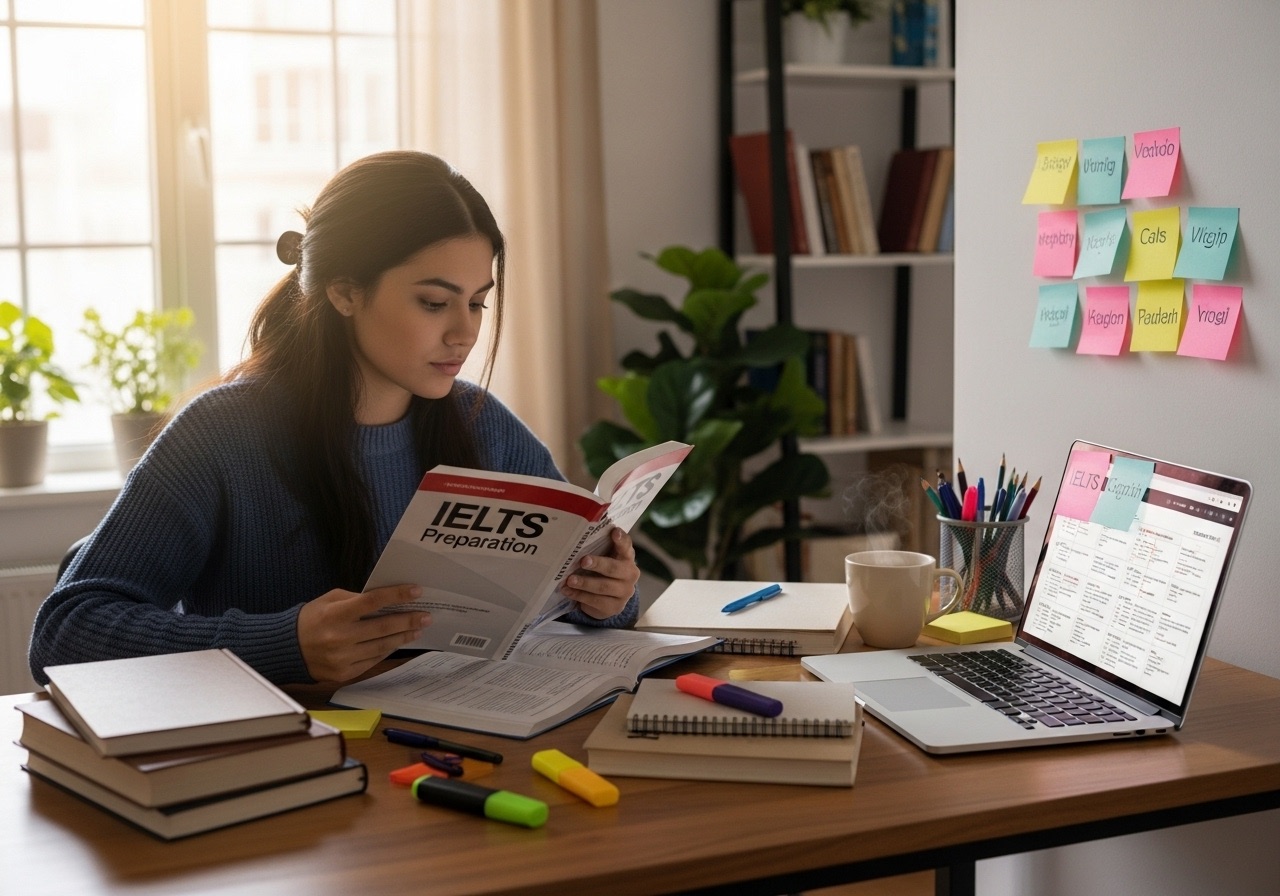
(What to focus on when time is tight, and what to ignore)
Let’s be honest.
Most students don’t start English test preparation as early as they planned. Life happens. Work happens. Application deadlines creep up faster than expected.
So if you’re reading this with weeks or even days left before your IELTS or PTE test — you’re not alone.
This article is written for real situations, not ideal ones.
We’ll cover:
- What actually moves your score in the final stretch
- How to prioritise sections when time is limited
- Practical strategies for IELTS and PTE
- Test-day mindset and mistakes to avoid
- What to do if your score still falls short
First: reset your expectations (this matters)
Last-minute prep is not about learning everything.
It’s about:
- Avoiding easy mistakes
- Playing to the test format
- Maximising the score you can get with the skills you already have
This mindset alone reduces panic — and panic costs marks.
Step 1: Know which test you’re sitting (IELTS vs PTE)
Before studying another word, be clear on this:
IELTS (Academic)
- Human-assessed speaking
- Clear band descriptors
- Writing and speaking often decide the score
PTE Academic
- Fully computer-based
- Automated scoring
- Speed, structure, and pronunciation matter more
Last-minute prep is different for each.
Don’t mix strategies.
Step 2: Prioritise the sections that move scores fastest
When time is short, not all sections are equal.
IELTS — fastest gains
- Writing (Task 2 especially)
- Speaking (fluency + coherence)
- Listening & Reading (mainly technique)
PTE — fastest gains
- Speaking (this affects multiple sections)
- Reading aloud / repeat sentence tasks
- Writing templates (structure over creativity)
If you only have limited time, focus here first.
Step 3: Last-minute IELTS strategies (practical, not theory)
IELTS Writing (biggest score swing)
- Memorise clear essay structures
- Don’t chase fancy vocabulary — chase clarity
- Always answer the question directly
- Task 2 matters more than Task 1
Common last-minute mistake:
Trying to learn new words instead of fixing structure.
IELTS Speaking
- Fluency > accuracy at this stage
- Speak in full sentences
- Extend answers naturally (why / how / example)
If you freeze:
- Pause
- Rephrase the question
- Continue calmly
Examiners care about communication, not perfection.
IELTS Listening & Reading
- Don’t overthink answers
- Follow the question order
- Watch spelling and plurals
At this stage, practise with real test papers only.
Step 4: Last-minute PTE strategies (very different mindset)
PTE rewards system behaviour, not creativity.
Speaking (the core engine)
- Speak clearly and steadily
- Don’t stop mid-sentence
- Even partial answers score points
Tasks like Read Aloud and Repeat Sentence impact:
- Speaking
- Listening
- Overall score
So practise these daily, even briefly.
PTE Writing
- Use safe templates
- Hit word count
- Stay on topic
You’re not being graded like an English essay — you’re being scored by criteria.
PTE Reading & Listening
- Skim, don’t get stuck
- One difficult question shouldn’t derail the test
- Keep moving — timing matters more than perfection
Step 5: Practice resources that actually help (late stage)
At this point, avoid random YouTube rabbit holes.
Focus on:
- Official IELTS / PTE practice tests
- Timed practice only
- Reviewing why answers were wrong
Even one full test under exam conditions is more valuable than hours of scattered prep.
Step 6: Test-day mindset (underrated but critical)
The night before
- Stop studying early
- Prepare documents
- Sleep
On test day
- Eat lightly
- Arrive early
- Expect one or two “bad” questions — they happen
A bad question does not equal a bad test.
Most students who panic after one section perform worse overall.
Step 7: If you don’t hit the required score
This happens more often than people admit.
Your options may include:
- Retaking the test quickly
- Switching test type (e.g. IELTS → PTE)
- Applying with a conditional offer
- Choosing universities with flexible English policies
One result does not end your Ireland plan.
Common last-minute mistakes to avoid
- Studying everything instead of prioritising
- Ignoring test format
- Overusing memorised vocabulary
- Panicking during the exam
- Comparing yourself to others
Control what you can control.
Final coaching advice
Last-minute preparation isn’t about miracles.
It’s about:
- Being calm
- Being strategic
- Avoiding avoidable mistakes
Many students meet their English requirement not because they were perfect, but because they were prepared for the test they were actually sitting.
You can still do well, if you focus on the right things.